Pump Foil: The Art of Self-Perpetual Motion
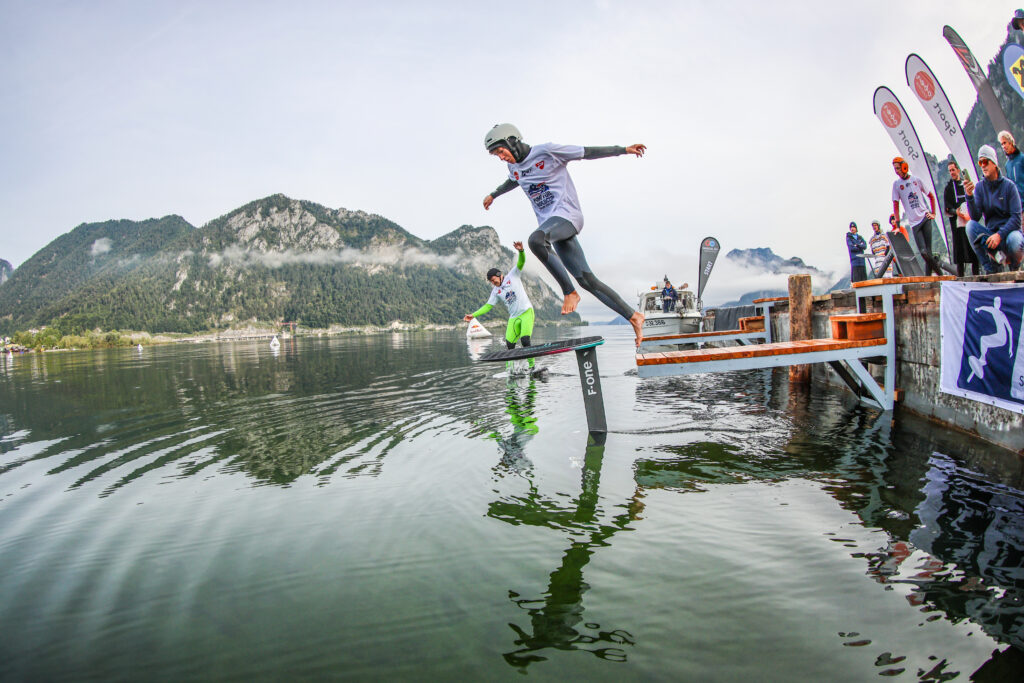
The Pump Foil discipline is perhaps the most mesmerizing and technically puzzling of all the disciplines featured on the Surf Foil World Tour. It is foiling in its purest form—a discipline where there are no waves, no boats, and no tows. There is only the athlete, the foil, and the relentless pursuit of perpetual motion.
Often described as “cycling on water,” Pump Foil challenges athletes to generate and maintain speed and flight using nothing but their own body mechanics and the energy of the open water.
The Discipline Explained
At its core, Pump Foil is exactly what it sounds like: the act of “pumping” a foil board to maintain flight without any external propulsion. Unlike Surf Foil, which relies on breaking waves, or Wake Foil, which uses a boat, Pump Foil takes place in flat water, choppy conditions, or even small rolling swells.
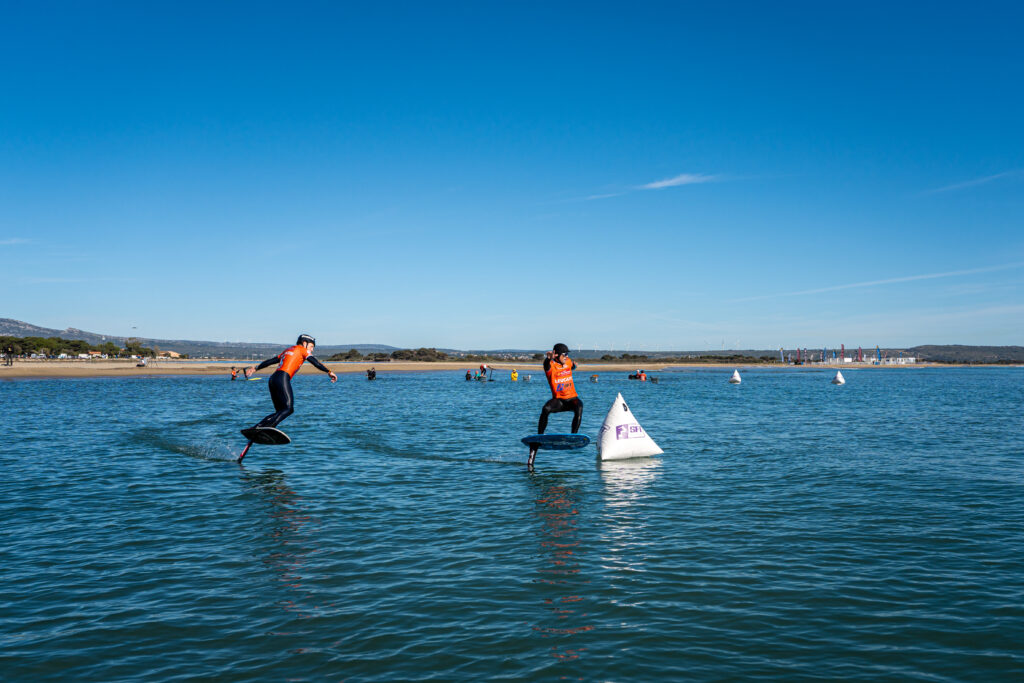
The rider begins either by performing a “deep water start” (lifting themselves from the water onto the foil) or by taking off from a small bump of energy. Once airborne, the real challenge begins. Through a rhythmic, full-body undulation—similar to the motion of pumping a swing—the rider transfers kinetic energy into the foil system. This pumping motion generates forward thrust, allowing the athlete to maintain speed, turn, and even accelerate across the water.
The sensation is one of pure freedom. Without the need for waves or machinery, the rider becomes a self-sufficient engine of flight, gliding silently across bays, harbors, and open coastlines.
Key Elements of Competition
On the Surf Foil World Tour, Pump Foil competition is a test of endurance, efficiency, and technical finesse. It strips foiling down to its most fundamental elements.
-
Endurance and Stamina: Pump Foil races or freestyle sessions can last for extended periods. Maintaining the constant, powerful pumping motion required to stay on foil demands exceptional cardiovascular fitness and muscular endurance. It is a full-body workout disguised as an elegant water dance.
-
Pumping Efficiency: Not all pumps are created equal. Judges and timing officials look for riders who can extract the maximum speed and glide from minimal effort. The most efficient pumpers maintain a high average speed while expending less energy, allowing them to outlast or outrun their competitors.
-
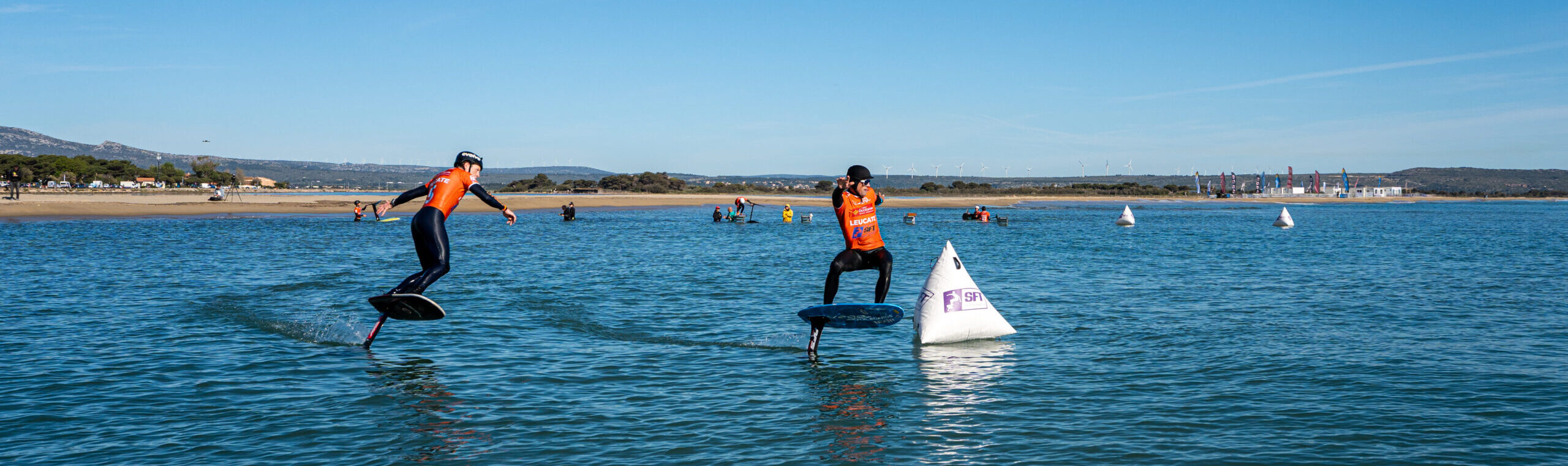
Turning and Maneuverability: Even without waves, Pump Foil athletes must navigate courses that include buoys, slaloms, or marked channels. Executing tight, controlled turns at speed while maintaining flight—without falling back into the water—is a critical skill.
-
Speed Maintenance: In a straight-line race, the rider who can generate the highest sustained speed through pumping alone will win. This requires perfect technique, precise weight distribution, and an intimate understanding of how the foil responds to every body movement.
-
Flat-Start Ability: Many Pump Foil competitions begin from a dead stop in deep water. The ability to generate enough lift from a floating position to rise onto the foil—using only pumps and body momentum—is the first and most crucial hurdle.
Why It’s Captivating
Pump Foil is foiling in its most minimalist and magical form. To watch an athlete rise from the water and glide endlessly across a flat, featureless bay, propelled by nothing but their own rhythm, is to witness something that feels almost like magic.
For the Surf Foil World Tour, Pump Foil represents the ultimate expression of mind-body-foil connection. It is a discipline accessible anywhere there is water, yet masterable by only the most dedicated and physically gifted athletes. It proves that with the right equipment and the right technique, the ocean itself becomes an endless highway, and the rider becomes the engine.